Forex Swing Trading Signals: Catch High-Probability Trades

You know the feeling. You spend hours staring at five-minute charts, waiting for the perfect setup, only to end up forcing a bad trade out of sheer boredom or frustration. It happens to me too. Truth is, most retail traders burn out for years before they ever see consistent profits. They treat trading like a video game that rewards constant clicking and hyperactivity.
The reality is quite different!
The most profitable market moves don’t require you to be glued to your screen 24/7. They require patience, structure, and a well-tested plan. That’s exactly where forex swing trading signals come in.
You can use these signals to strip away the raw emotion from trading and focus entirely on high-probability setups that play out over days or weeks. You don’t need a Wall Street background to understand them, but you do need discipline. By relying on a structured trading signals service, you stop guessing and start executing.
You don’t need to be glued to your charts to be profitable. You just need a better system.
What Are Forex Swing Trading Signals?
Forex swing trading signals are structured trade blueprints, not random guesses. They specify exactly what to trade, where to enter the trade, and where to exit. A high-quality signal doesn’t just tell you to buy this and wish you luck. It must show you the context.
You should expect four critical components in any signal that is worth trading:
- Exact entry price: The specific level at which the trade becomes valid.
- Stop loss (SL): The exact point at which the trade idea is invalidated, protecting your capital from massive drawdowns.
- Take profit (TP): The target zone where you lock in your gains.
- Market context: The underlying technical or fundamental reason the trade is being taken in the first place.
Below is a sample swing trade signal from the DavronFX dashboard.
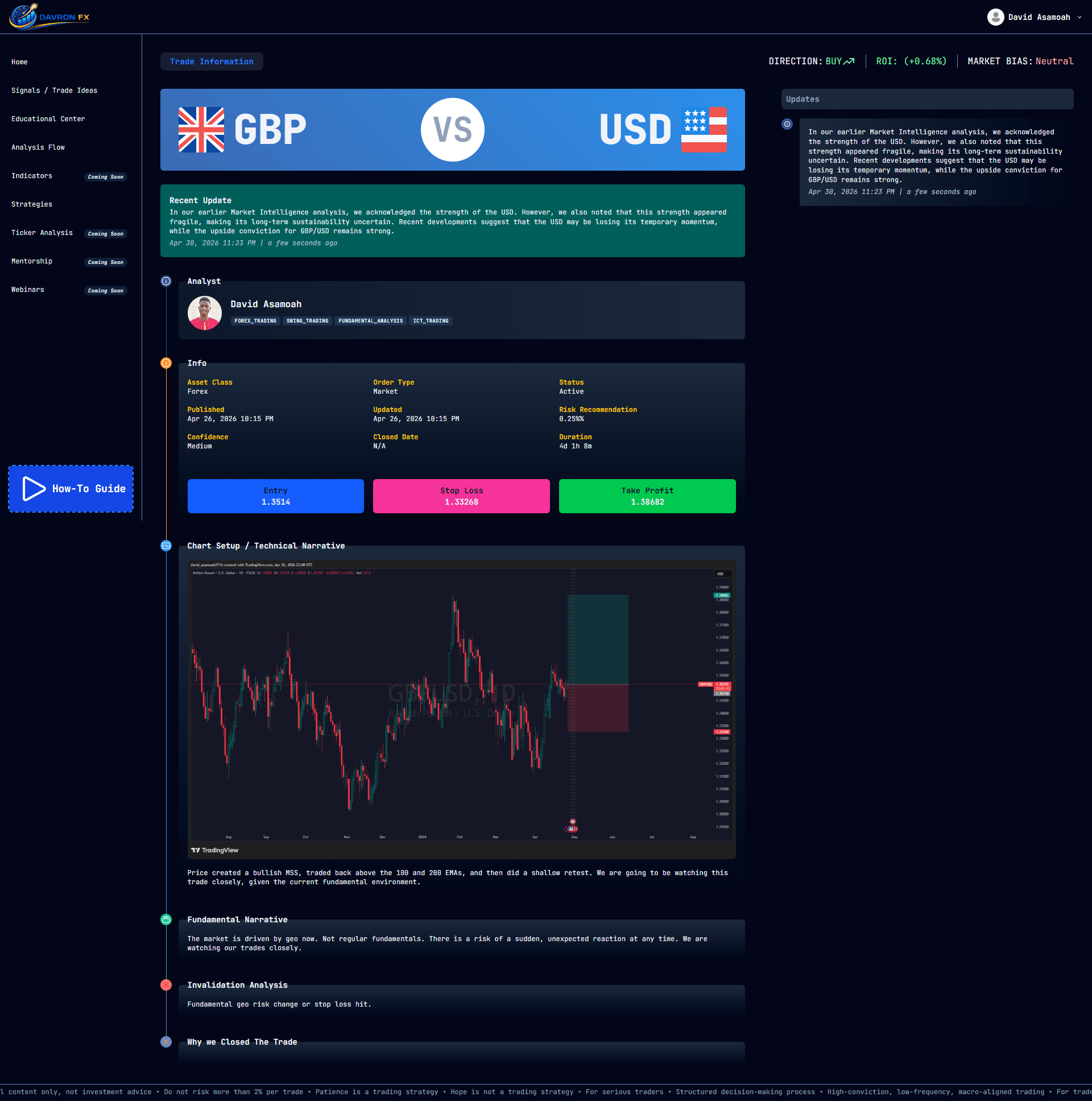
Blindly following trading signals without context is a recipe for blowing up your account. A real signal provides the context behind the trade. You learn the mechanics of swing trading in the forex market while actually participating in the market.
If the signals you’re receiving lack context, you’re just gambling.
Why Swing Trading Signals Are Perfect for Busy Traders
Screen time does not equal profitability. You might think that staring at the charts longer gives you a better feel for the market. I’d like to disagree. More screen time usually leads to more emotional mistakes, overtrading, and eventual account depletion.
If you have a 9–5 job, a demanding schedule, or lack the patience and discipline for swing trading, trading signals can be a practical alternative.
A platform like DavronFX solves this problem by doing the heavy lifting for you. You receive the setup, execute your pending or market order, then walk away. This approach fits perfectly with a full-time job or a busy family lifestyle.
We focus purely on quality over quantity. Most of our trades play out over days or weeks; you only need to check your trading platform once or twice a day. This drastic reduction in chart-watching naturally reduces emotional decision-making. You aren’t tempted to close a trade early just because a single 15-minute candle looks scary.
Trade the higher timeframes, and you get your life back.
How Forex Swing Trading Signals Work (Step-by-Step)
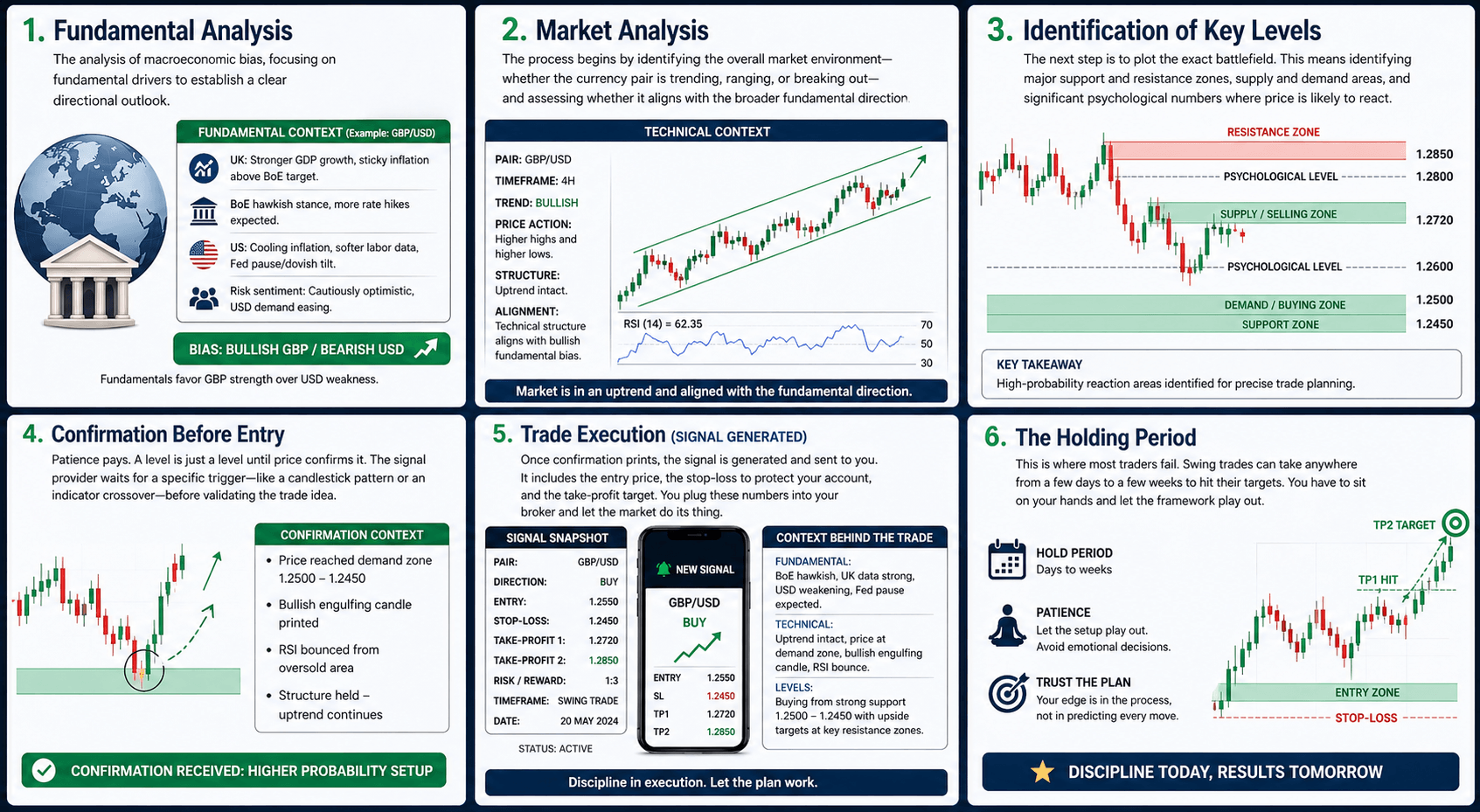
High-quality signals are generated through a structured, repeatable process—they don’t appear randomly. Every alert you receive is backed by a well-defined system.
1. Fundamental Analysis
The analysis of macroeconomic bias, focusing on fundamental drivers to establish a clear directional outlook.
2. Market Analysis
The process begins by identifying the overall market environment—whether the currency pair is trending, ranging, or breaking out—and assessing whether it aligns with the broader fundamental direction.
3. Identification of Key Levels
The next step is to plot the exact battlefield. This means identifying major support and resistance zones, supply and demand areas, and significant psychological numbers where price is likely to react.
4. Confirmation Before Entry
Patience pays. A level is just a level until price confirms it. We wait for a specific trigger—such as a candlestick pattern, price action, or an indicator signal—before validating the trade idea.
5. Trade Execution
Once confirmation is confirmed, the trade signal is published, and you receive a notification that includes clear entry, stop-loss, and take-profit levels, market context, and invalidation analysis. You simply enter these parameters into your trading platform and let the setup unfold as planned.
6. The Holding Period
This is where most traders’ emotions betray them. Swing trades can take anywhere from a few days to a few weeks to hit their targets. You have to sit on your hands and let the framework play out.
Below is a visual illustration of one way we identify a setup.
Trust the process (it just works).
Proven Strategies Behind High-Quality Swing Trading Signals
A signal is only as good as the strategy behind it. If you want to swing trade forex successfully using signals, you need to understand the methodologies behind the alerts. That’s why our analysts display their trading style on their profiles.
Here are a few strategies to consider. The real advantage is that you can learn, refine, and apply any of them yourself—building a rule-based approach that fits your trading style.
The Trend & Pullback Strategy
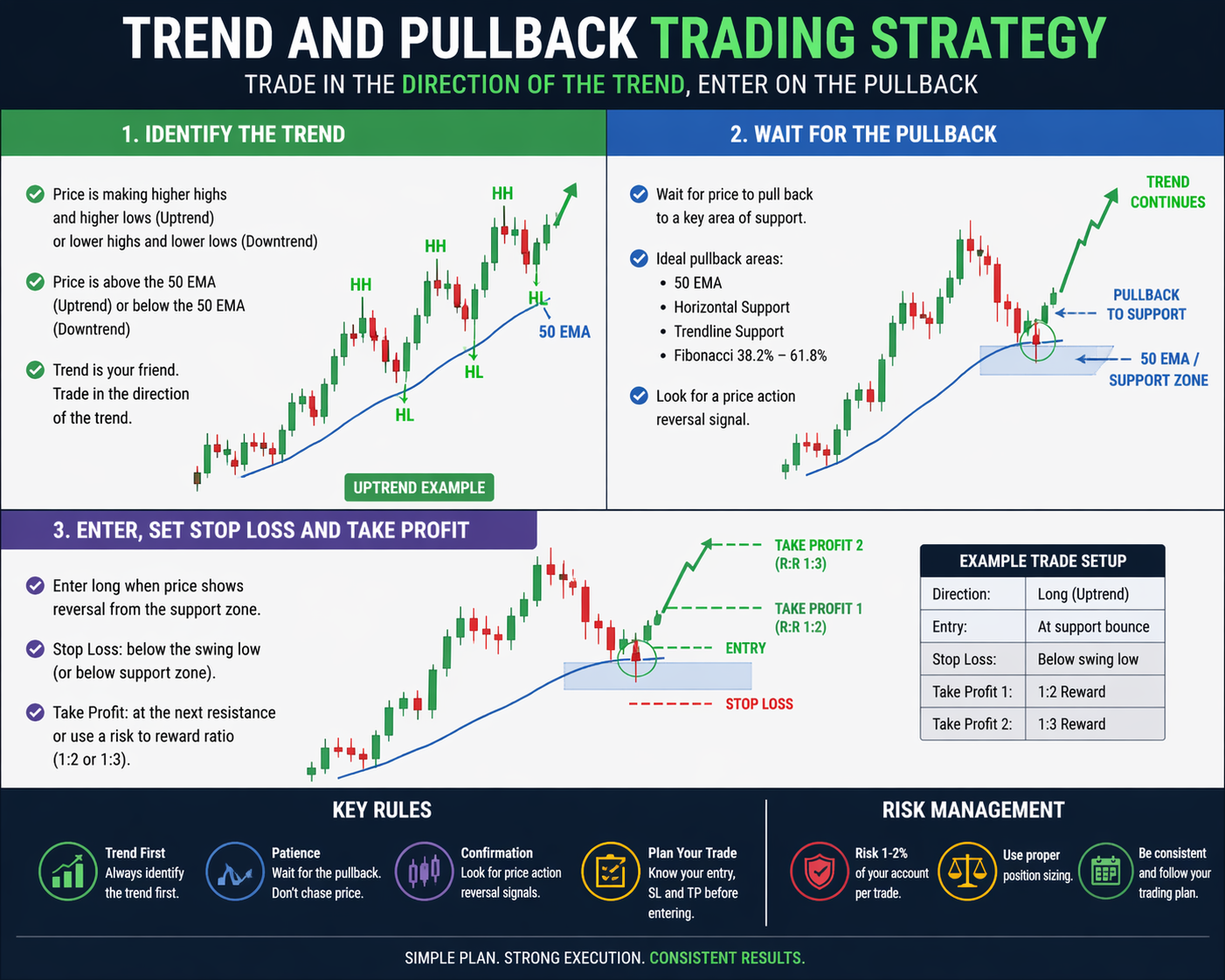
Markets move in waves. This approach focuses on identifying a strong trend, waiting for a temporary pullback against it, and entering as momentum shifts back in the direction of the trend. Because entries are taken near the end of the retracement, stop losses can be placed tightly beyond the pullback, allowing for great risk-to-reward setups.
The Support & Resistance Bounce
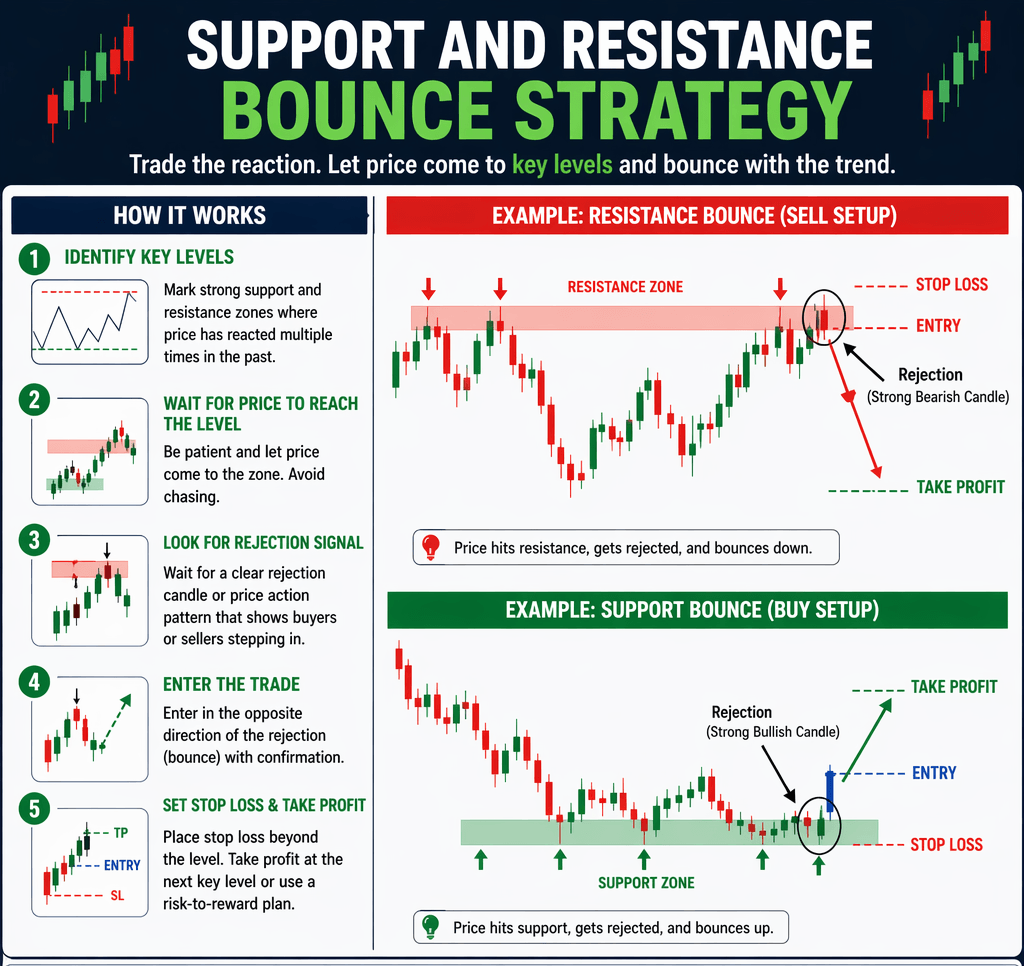
Markets have memory. This approach identifies areas where price has reversed multiple times in the past. When price approaches these zones again, the strategy expects another bounce. It is simple, highly effective, and easy to trade. This strategy works very well in a range-bound market.
The Moving Average Trend Strategy
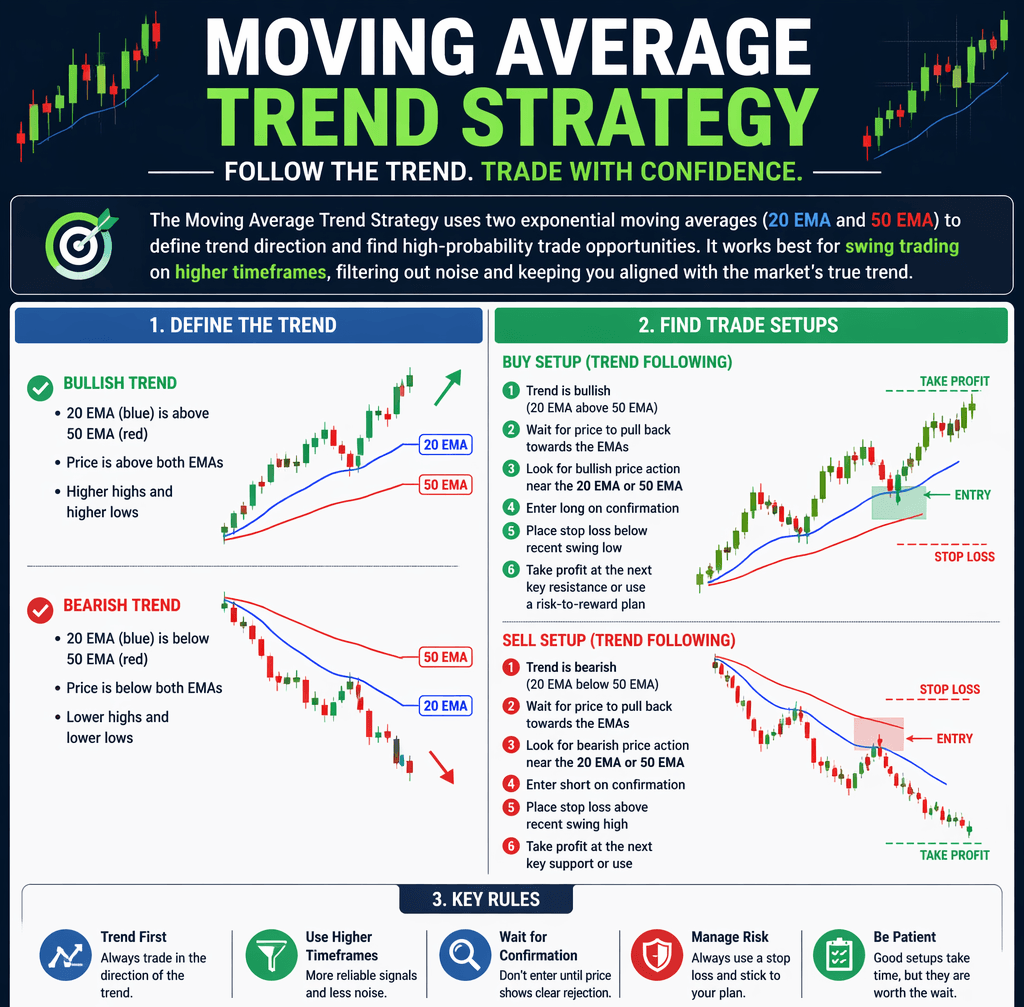
Moving averages help filter out noisy price movements, making the overall trend easier to see. In this strategy, traders use medium-term moving averages (like the 20-day or 50-day) as areas where price may react. When price pulls back to one of these levels and shows signs that the trend is continuing, it can be used as a signal to enter a trade in that direction.
The Breakout from Consolidation
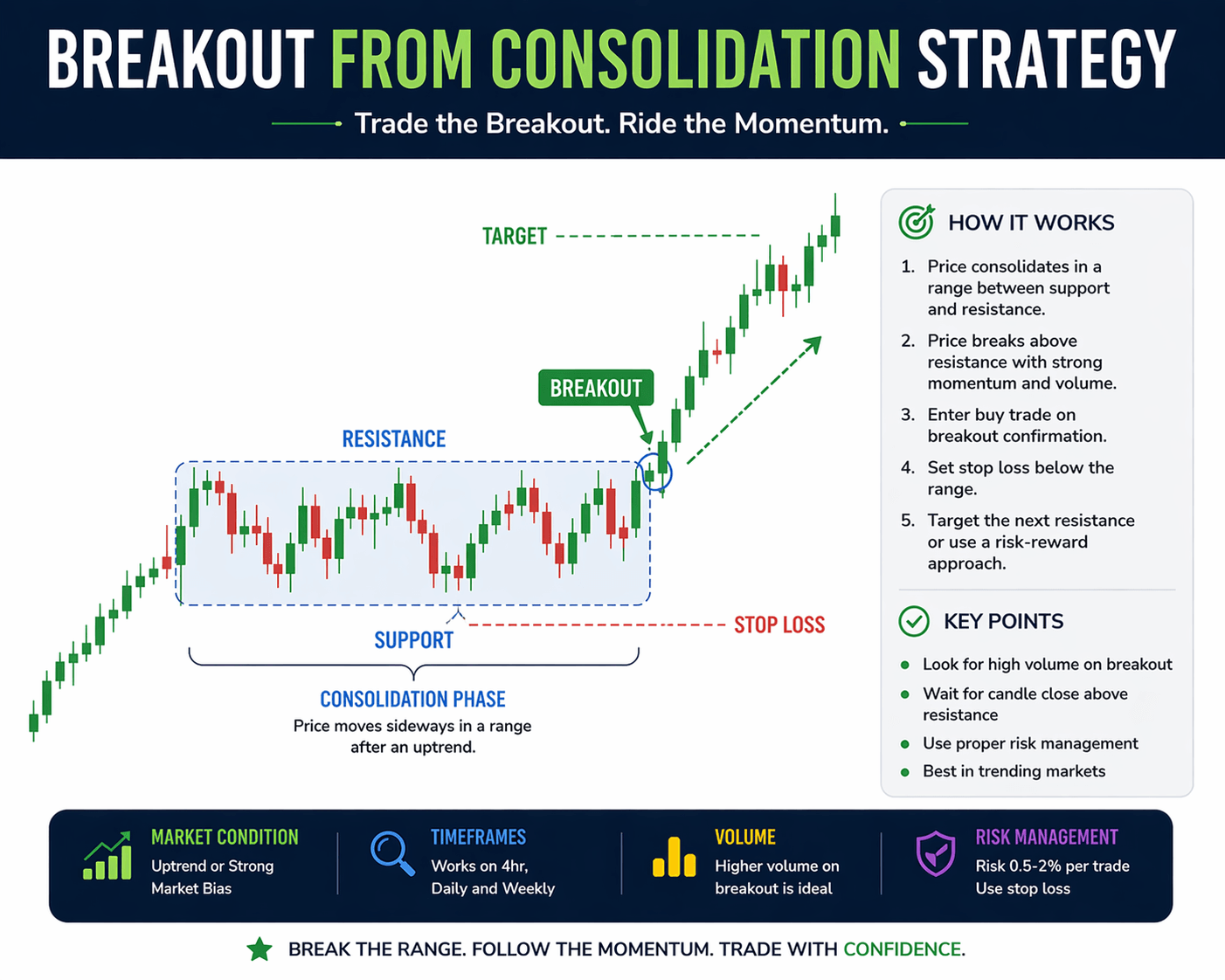
Periods of low volatility often precede periods of high volatility. This strategy identifies tight trading ranges and places pending orders just outside the range boundaries. When the market finally makes a decision, you catch the explosive move that follows.
The RSI Mean Reversion Strategy
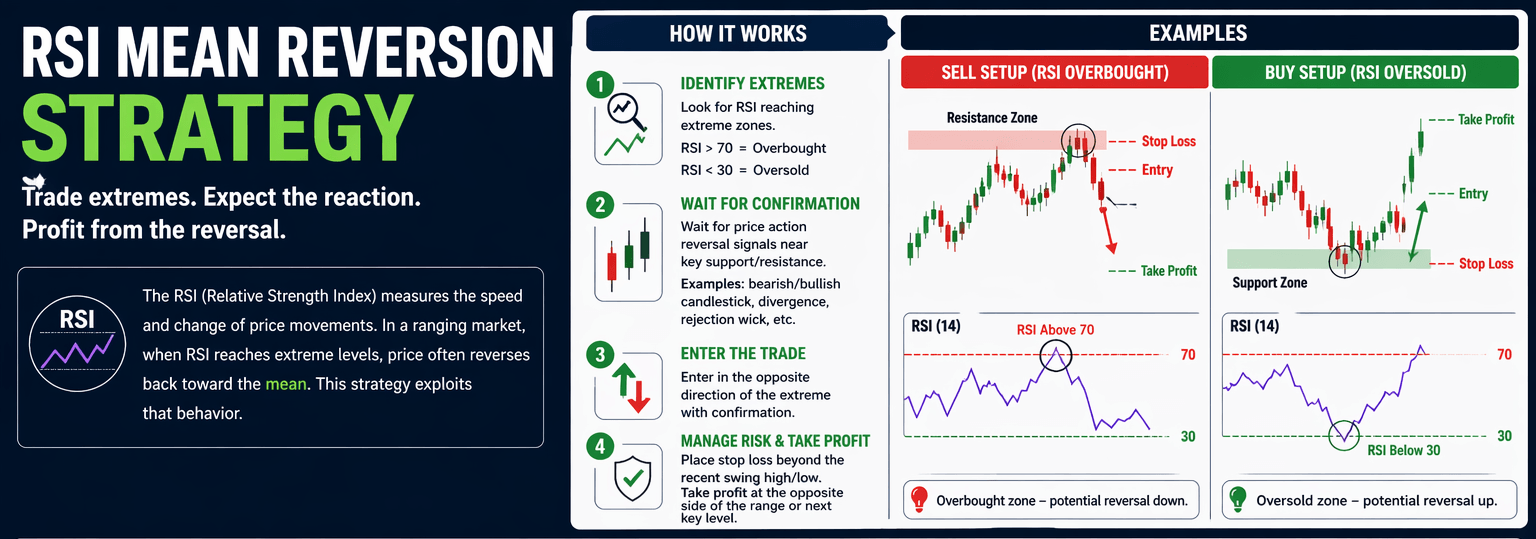
This is a counter-trend strategy that aims to profit from temporary price extremes rather than following the main trend. When the RSI shows overbought or oversold conditions, it signals that price may be stretched and due for a pullback or reversal. Traders can then look for entries against the prevailing trend, aiming to capture the move back toward the average.
Learn the mechanics behind these strategies, and you will never trade blind again.
Benefits of Using Forex Swing Trading Signals
Structure eliminates panic. When you use a reliable swing trading signals service that emphasizes structure and discipline, you stop waking up in a cold sweat to check your phone. You get a clear, step-by-step blueprint for every position you take.
Win by process, not by impulse.
It helps improve your risk-to-reward potential. Because swing trading targets larger price moves, your potential profits are often much bigger than your stop losses. This allows you to stay profitable even without a very high win rate. As long as your risk-to-reward ratio is well managed, you can still come out ahead even if some trades don’t work out.
Time efficiency is the ultimate luxury. You outsource the grueling hours of chart analysis to the professionals. You maintain consistency through strict rules, making it an ideal approach for busy professionals and part-time traders who want market exposure without the time sink.
Structure your trading, and consistency will follow.
Limitations You Should Know (Keep It Real)
Here’s a basic fact about trading: not every trade will result in a win. If a signal provider claims a 95% win rate or guarantees consistent daily profits, it’s a major red flag. Many traders have fallen for such misleading promises.
Drawdowns are entirely normal. You will have losing streaks. You will have weeks where the market simply does not behave logically. Because swing trading generates fewer setups than day trading, you have to be highly patient. You might go days without a valid signal.
Execution ultimately rests with you: A signal is just information. If you risk 10% of your account on a single trade because you feel greedy, you will still blow your account. Discipline cannot be outsourced.
Accept the reality of losses, and you will trade with a much clearer head.
How to Choose the Best Forex Swing Trading Signals
Look for transparency. Transparent providers publish their losing trades just as loudly as their winning trades. You want to see a verified track record that spans months, not just a few lucky days.
Avoid anyone shouting “guaranteed profits”. Real trading is about probabilities, not guarantees. Look for a service that emphasizes structure, strict risk management, and consistent signal delivery.
Context is everything. Choose a provider that explains the “why” behind the trade. If they just drop a price point and a stop-loss without providing context, they are stunting your growth as a trader.
Demand transparency, or keep your money in your pocket.
How to Use Swing Trading Signals Effectively
Don’t blindly copy—understand the setup. When a signal comes in, open your charting software. Identify the levels. Assess the trend. If the trade makes sense to you, take it. If it feels fundamentally wrong given your education, skip it. You are the CEO of your own account.
Stick to militant risk management. Never risk more than 0.25% to 2% of your total capital on a single signal. It does not matter how convinced you are about a signal. Strictly follow the exact entry, stop-loss, and take-profit parameters. In fact, most trades at DavronFX focus on risking just 0.50% of your account per trade.
Avoid overleveraging at all costs. Trying to get rich on one trade is the fastest way to go broke with a good idea. Track your performance meticulously in a trading journal so you can review the data objectively at the end of the month.
Manage your risk, and you will survive long enough to thrive.
Common Mistakes to Avoid
Entering a trade too early will burn you. If a signal calls for a pending order at 1.1050, do not enter at 1.1080 just because you fear missing out. The math of the trade relies on that specific entry price.
Moving your stop loss emotionally is an undisciplined behavior. Once a trade is active, leave the stop loss exactly where the signal placed it. Widening your stop because you “hope” the market will turn around ruins your risk-to-reward ratio.
Do not chase missed trades. If you see a signal four hours late and the price has already moved halfway toward the target, let it go. There will always be another setup tomorrow.
Trade the plan, not your feelings.
Who Should Use Forex Swing Trading Signals?
Busy professionals are a perfect fit. If you work a 9-to-5, run a business, or have a demanding family life, you cannot spend all day in front of TradingView. Signals let you participate in global markets on your own schedule.
Beginner traders benefit greatly. When you are new to trading, the markets can look like pure chaos. Signals allow you to earn while you study the underlying mechanics of price action.
Traders lacking discipline need this. If you constantly revenge trade, overleverage, or ignore your own rules, following a signal can help while you learn the discipline.
If you want structured, rule-based trading, this is your path forward.
Real Edge: Why Context Matters More Than Signals
Signals without context equal gambling. A buy alert at a random price means nothing if you don’t understand the broader market environment. The real edge in trading comes from confluence.
Confluence occurs when multiple factors align. You don’t just buy because an indicator crossed over. You buy because the indicator crossed over while price bounced off a level in the direction of the trend. That is confluence.
Higher timeframe alignment is critical. A beautiful setup on a 1-hour chart will get crushed if it goes directly against the daily chart’s momentum. Quality signals always respect the larger market structure.
Understand the context, and you graduate from a follower to a real trader.
Final Thoughts: Trade Smarter, Not Harder
Trading doesn’t have to consume your life. By leveraging a structured swing trading strategy and reliable signals, you eliminate the frantic chart-watching and the emotional rollercoaster of day trading.
Set realistic expectations. You will not double your account in a week. But by applying strict risk management to high-probability setups, you can achieve decent monthly returns. Focus on consistency over quick, reckless wins.
Wing it, and you’ll probably blow your account. Do it right, and you’ll wonder why you waited so long to start.
Start Catching High-Probability Trades Today
Get structured swing trading signals straight to your inbox. Stop guessing and start executing with clarity.
- Receive clear entries, stop losses, target levels, technical narrative, fundamental analysis, and invalidation analysis.
- Trade confidently without staring at charts all day.
- Stay updated with real-time notifications and market context.
Join DavronFX today and discipline your trades.
FAQ
Are forex swing trading signals profitable?
Yes, but profitability depends entirely on your own risk management. A signal provider can give you a winning strategy, but if you risk too much on losing trades and cut your winners early, you will still lose money. Structure and discipline are required.
How many signals per week should I expect?
Swing trading is about quality, not quantity. Depending on market volatility, you might see anywhere from 2 to 5 high-quality setups per week. If a service is sending you 20 swing signals a day, they are forcing trades.
Can beginners use trading signals?
Absolutely. Signals are one of the best ways for beginners to bridge the gap between theory and live execution. They provide a safe, structured framework while you learn the mechanics of the forex market.